The AWS Outage Killed Ring. My Cameras Kept Rolling.
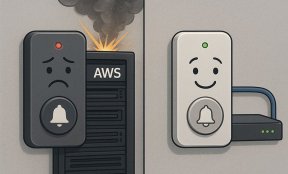
Recent issues with the Ring ecosystem due to AWS downtime proved that security shouldn't be taken lightly. When planning a home security system, it's better...
June 2026
![]()
 The Aurora supercomputer at Argonne National Lab. What you see here is just one row - there are 7 more behind it.
This past weekend I went to the Argonne National Laboratory Open House in Lemont, Illinois. I honestly didn't know exactly what to expect, but I left genuinely blown away. If you're anywhere near the Chicago area and have even a passing interest in tech, science, or just seeing wild engineering up close - you need to put this on your list.
Let me walk you through what I saw.
The highlight of the visit for me was Aurora - one of the most powerful supercomputers in the world, sitting right here outside of Chicago.
When you first walk into the room, the scale of it hits you before anything else. The photo above shows one row of racks. What the photo doesn't show is that there are 7 more rows behind it. In total, Aurora has 166 racks, and each rack holds 64 blades. The whole thing takes up roughly the space of two basketball courts and weighs around 600 tons.
Just let that sink in.
 The Argonne Leadership Computing Facility - the building that houses Aurora.
Here are the raw specs if you're into that kind of thing:
And the whole system is cooled by 44,000 gallons of water running through it continuously.
It's easy to look at the numbers and nod along without really getting it. So here's what "exascale" actually means: Aurora can do more than one quintillion calculations per second. That's a 1 followed by 18 zeros.
The way one of the Argonne staff explained it to us: if every single person on Earth simultaneously solved 125 million math problems per second — that's Aurora's speed.
Right now it's running more than 70 active research projects. We're talking things like:
Basically: problems so complex that no regular computer cluster could touch them.
 An open Aurora blade on display - you can see the liquid cooling pipes running across the processors and GPUs.
The tour itself was informative but moved pretty fast - probably a bit too fast honestly. If you go in hoping for a deep technical dive, you might wish it was longer. That said, the best part wasn't the guided portion anyway. It was the ability to just walk up and talk to the people who actually work with Aurora every day. I got to ask questions and get answers from someone who deals with this system hands-on. That kind of access - to the real people behind something like this - you don't get that often. It was worth the whole trip on its own.
Here's something I didn't fully appreciate going in: the supercomputer is actually just one corner of what Argonne does.
The lab covers a massive range of research - materials science, nuclear energy, battery technology, particle physics, environmental science, and a lot more. I only had a day, and I barely scratched the surface. Honestly, even a full week probably wouldn't be enough to properly explore everything they have going on out there.
 These looped pipes run between the lab buildings. Still trying to figure out why they're designed this way — drop a comment if you know!
A few things I wish someone had told me before I went: Drive between buildings, don't walk. The campus is huge. If you try to walk from one facility to another, you'll burn half your day just getting around. Plan your route in advance. There's a lot to see and the Open House has different things happening in different locations. It's worth mapping out what you actually want to prioritize before you get there. Talk to the staff. I can't stress this enough. Don't just follow the tour group. Stop, ask questions, have a conversation. The people there are genuinely enthusiastic about what they do and happy to explain things.
Without question - yes.
I went in expecting a cool field trip and came out with a genuine appreciation for the kind of infrastructure that powers cutting-edge science. Seeing Aurora in person, talking to the people who run it, and getting a glimpse into what Argonne actually does on a daily basis, it's the kind of thing that's hard to describe until you're standing there.
If you ever get the chance, go.
Recent issues with the Ring ecosystem due to AWS downtime proved that security shouldn't be taken lightly. When planning a home security system, it's better...
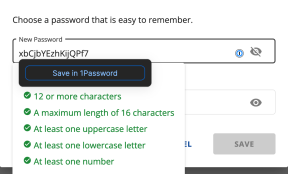
Bluehost, thanksgiving is close, and I have a gift for you. I have found an annoying bug that I'm sure caused an increase in customer...
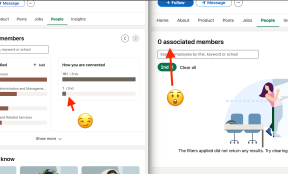
As an IT professional, leveraging your network is crucial when applying for jobs. LinkedIn, a primary platform for professional networking, should perform this process seamlessly....